Digital image processing is the use of a digital computer to process digital images through an algorithm. As a subcategory or field of digital signal processing, digital image processing has many advantages over analog image processing. It allows a much wider range of algorithms to be applied to the input data and can avoid problems such as the build-up of noise and distortion during processing. Since images are defined over two dimensions (perhaps more), digital image processing may be modeled in the form of multidimensional systems. The generation and development of digital image processing are mainly affected by three factors: first, the development of computers; second, the development of mathematics (especially the creation and improvement of discrete mathematics theory); and third, the demand for a wide range of applications in environment, agriculture, military, industry and medical science has increased. == History == Many of the techniques of digital image processing, or digital picture processing as it often was called, were developed in the 1960s, at Bell Laboratories, the Jet Propulsion Laboratory, Massachusetts Institute of Technology, University of Maryland, and a few other research facilities, with application to satellite imagery, wire-photo standards conversion, medical imaging, videophone, character recognition, and photograph enhancement. The purpose of early image processing was to improve the quality of the image. In image processing, the input is a low-quality image, and the output is an image with improved quality. Common image processing includes image enhancement, restoration, encoding, and compression. The first successful application was the American Jet Propulsion Laboratory (JPL). They used image processing techniques such as geometric correction, gradation transformation, noise removal, etc. on the thousands of lunar photos sent back by the Space Detector Ranger 7 in 1964, taking into account the position of the Sun and the environment of the Moon. The impact of the successful mapping of the Moon's surface map by the computer has been a success. Later, more complex image processing was performed on the nearly 100,000 photos sent back by the spacecraft, so that the topographic map, color map and panoramic mosaic of the Moon were obtained, which achieved extraordinary results and laid a solid foundation for human landing on the Moon. The cost of processing was fairly high, however, with the computing equipment of that era. That changed in the 1970s, when digital image processing proliferated as cheaper computers and dedicated hardware became available. This led to images being processed in real-time, for some dedicated problems such as television standards conversion. As general-purpose computers became faster, they started to take over the role of dedicated hardware for all but the most specialized and computer-intensive operations. With the fast computers and signal processors available in the 2000s, digital image processing has become the most common form of image processing, and is generally used because it is not only the most versatile method, but also the cheapest. === Image sensors === The basis for modern image sensors is metal–oxide–semiconductor (MOS) technology, invented at Bell Labs between 1955 and 1960, This led to the development of digital semiconductor image sensors, including the charge-coupled device (CCD) and later the CMOS sensor. The charge-coupled device was invented by Willard S. Boyle and George E. Smith at Bell Labs in 1969. While researching MOS technology, they realized that an electric charge was the analogy of the magnetic bubble and that it could be stored on a tiny MOS capacitor. As it was fairly straightforward to fabricate a series of MOS capacitors in a row, they connected a suitable voltage to them so that the charge could be stepped along from one to the next. The CCD is a semiconductor circuit that was later used in the first digital video cameras for television broadcasting. The NMOS active-pixel sensor (APS) was invented by Olympus in Japan during the mid-1980s. This was enabled by advances in MOS semiconductor device fabrication, with MOSFET scaling reaching smaller micron and then sub-micron levels. The NMOS APS was fabricated by Tsutomu Nakamura's team at Olympus in 1985. The CMOS active-pixel sensor (CMOS sensor) was later developed by Eric Fossum's team at the NASA Jet Propulsion Laboratory in 1993. By 2007, sales of CMOS sensors had surpassed CCD sensors. MOS image sensors are widely used in optical mouse technology. The first optical mouse, invented by Richard F. Lyon at Xerox in 1980, used a 5 μm NMOS integrated circuit sensor chip. Since the first commercial optical mouse, the IntelliMouse introduced in 1999, most optical mouse devices use CMOS sensors. === Image compression === An important development in digital image compression technology was the discrete cosine transform (DCT), a lossy compression technique first proposed by Nasir Ahmed in 1972. DCT compression became the basis for JPEG, which was introduced by the Joint Photographic Experts Group in 1992. JPEG compresses images down to much smaller file sizes, and has become the most widely used image file format on the Internet. Its highly efficient DCT compression algorithm was largely responsible for the wide proliferation of digital images and digital photos, with several billion JPEG images produced every day as of 2015. Medical imaging techniques produce very large amounts of data, especially from CT, MRI and PET modalities. As a result, storage and communications of electronic image data are prohibitive without the use of compression. JPEG 2000 image compression is used by the DICOM standard for storage and transmission of medical images. The cost and feasibility of accessing large image data sets over low or various bandwidths are further addressed by use of another DICOM standard, called JPIP, to enable efficient streaming of the JPEG 2000 compressed image data. === Digital signal processor (DSP) === Electronic signal processing was revolutionized by the wide adoption of MOS technology in the 1970s. MOS integrated circuit technology was the basis for the first single-chip microprocessors and microcontrollers in the early 1970s, and then the first single-chip digital signal processor (DSP) chips in the late 1970s. DSP chips have since been widely used in digital image processing. The discrete cosine transform (DCT) image compression algorithm has been widely implemented in DSP chips, with many companies developing DSP chips based on DCT technology. DCTs are widely used for encoding, decoding, video coding, audio coding, multiplexing, control signals, signaling, analog-to-digital conversion, formatting luminance and color differences, and color formats such as YUV444 and YUV411. DCTs are also used for encoding operations such as motion estimation, motion compensation, inter-frame prediction, quantization, perceptual weighting, entropy encoding, variable encoding, and motion vectors, and decoding operations such as the inverse operation between different color formats (YIQ, YUV and RGB) for display purposes. DCTs are also commonly used for high-definition television (HDTV) encoder/decoder chips. == Tasks == Digital image processing allows the use of much more complex algorithms, and hence, can offer both more sophisticated performance at simple tasks, and the implementation of methods which would be impossible by analogue means. In particular, digital image processing is a concrete application of, and a practical technology based on: Classification Feature extraction Multi-scale signal analysis Pattern recognition Projection Some techniques that are used in digital image processing include: Anisotropic diffusion Hidden Markov models Image editing Image restoration Independent component analysis Linear filtering Neural networks Partial differential equations Pixelation Point feature matching Principal components analysis Self-organizing maps Wavelets == Digital image transformations == === Filtering === Digital filters are used to blur and sharpen digital images. Filtering can be performed by: convolution with specifically designed kernels (filter array) in the spatial domain masking specific frequency regions in the frequency (Fourier) domain The following examples show both methods: ==== Image padding in Fourier domain filtering ==== Images are typically padded before being transformed to the Fourier space, the highpass filtered images below illustrate the consequences of different padding techniques: Notice that the highpass filter shows extra edges when zero padded compared to the repeated edge padding. ==== Filtering code examples ==== MATLAB example for spatial domain highpass filtering. === Affine transformations === Affine transformations enable basic image transformations including scale, rotate, translate, mirror and shear as is shown in the following examples: To apply the affine
Robot Monk Xian'er
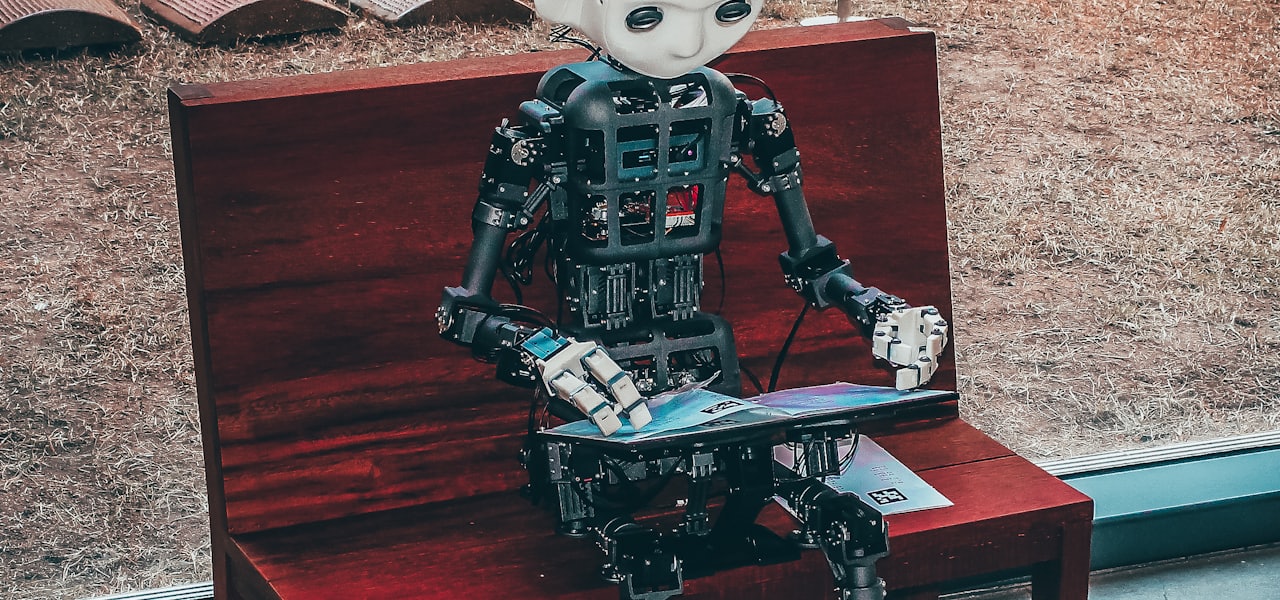
Robot Monk Xian'er (Chinese: 贤二机器僧) is a humanoid robot based on the cartoon character Xian'er. It was developed by a team of monks, volunteers and AI experts from Beijing Longquan Monastery in Beijing, China. He can follow human instructions to make body movements, read scriptures and play Buddhist music. He can chat and respond to people's emotional and spiritual questions with Buddhist wisdom. As a chatbot, Robot Monk Xian'er is available on certain public platforms including WeChat and Facebook. Over the years, master Xuecheng, the abbot of Beijing Longquan Monastery, replied to thousands of questions on Sina Weibo. These questions and their answers become the data source of the chatbot.
Anna Ridler
Anna Ridler (born 1985) is an artist who works with machine learning, handmade archives and moving image. She builds her own datasets to expose the labour and ideology embedded in the systems that organise knowledge. Her work is held in the permanent collections of the Whitney Museum of American Art, the Victoria and Albert Museum, M+ and ZKM Center for Art and Media Karlsruhe, and has been exhibited widely at cultural institutions including Tate Modern, Barbican Centre, Centre Pompidou, The Photographers' Gallery, Taipei Fine Arts Museum, MIT Museum, Kunsthaus Graz, ZKM Center for Art and Media Karlsruhe and Ars Electronica. == Biography == Born in London in 1985, Ridler spent her childhood raised between Atlanta, Georgia and the United Kingdom. She obtained a Bachelor of Arts in English Literature and Language from Oxford University in 2007 and a Master of Arts in Information Experience Design from the Royal College of Art in 2017. == Art practice == Ridler's practice uses technology, and in particular machine learning, to investigate how naming, classification and financial speculation determine what can be seen and what is erased. A core element of Ridler's work lies in the creation of handmade data sets through a laborious process of selecting and classifying images and text. By creating her own data sets, Ridler is able to uncover and expose underlying themes and concepts while also inverting the usual process of scraping pre-classified images found in large databases on the Internet. She began working with machine learning as an artistic material in 2017, at a moment when the technology required building every dataset by hand; that constraint became the foundation of the practice. Her interests are in drawing, machine learning, data collection, storytelling and technology. == Work == Some of Ridler's most notable works to date fall within her ‘tulip series’ which explores the hysteria around tulip mania and compares it to the speculation and bubbles surrounding cryptocurrencies. The series is expressed in three forms: a photographic dataset in Myriad (Tulips), 2018; two iterations of machine generated videos in Mosaic Virus (2018) and Mosaic Virus (2019); and a website with an accompanied functioning decentralized application in Bloemenveiling (2019). === Myriad (Tulips) (2018) === I wanted to draw together ideas around capitalism, value, and the tangible and intangible nature of speculation, and collapse from two very different yet surprisingly similar moments in history. Myriad (Tulips) (2018) is an installation of ten thousand hand-labeled photographs forming a dataset of unique tulips. The ten thousand, or myriad of, photographs were taken by Ridler over the course of three months, roughly the length of a tulip season, spent in Utrecht. Each photograph is carefully affixed one by one with magnets to a specially painted black wall in a laborious process to form a seemingly precise grid. Myriad (Tulips) (2018) has been exhibited in AI: More than Human, Barbican Centre, London, UK (May 16 - August 26, 2019); Error—The Art of Imperfection, Ars Electronica Export, Berlin, Germany (November 17, 2018 – March 3, 2019); Peer to Peer, Shanghai Centre of Photography, Shanghai, China (December 8 - February 9, 2020). The work was featured in Bloomberg, It’s Nice That, and Hyperallergic. For Myriad (Tulips), Ridler was nominated for a Beazley Design of the Year award for her presentation of an alternative perspective on how to engage with artificial intelligence; demonstrating a departure from ownership and control of major corporations to a more personalized process of constructing and conceptualizing from the ground-up. === Mosaic Virus (2018, 2019) === Mosaic Virus (2018) is a single screen video installation displaying a grid of continually evolving tulips in bloom. For Mosaic Virus (2019) Ridler used three screens. The appearance of the tulips is controlled by artificial intelligence using fluctuations in the price of bitcoin. The stripes on the tulips' petals reflect the value of the cryptocurrency. Ridler draws parallels with the tulip mania of the 17th century; representing the hysteria and speculation around crypto-currencies. The work takes its name from the mosaic virus which caused stripes in tulip petals, subsequently increasing their desirability and leading to speculative prices. Ridler trained a general adversarial network (GAN) on the set of ten thousand photographs of individual tulips from her work Myriad (Tulips). She used a technique called spectral normalization to improve the output. The work was exhibited in Error—The Art of Imperfection, Ars Electronica Export, Berlin, Germany (November 17, 2018 – March 3, 2019). === Bloemenveiling (2019) === Bloemenveiling (2019) is an auction of artificial-intelligence-generated tulips on the blockchain in the form of a functioning decentralized application: http://bloemenveiling.bid. Ridler collaborated with senior research scientist at DeepMind, David Pfau to investigate whether blockchain could be used as a means of finding poetic substance within it. The piece interrogates the way technology drives human desire and economic dynamics by creating artificial scarcity. In the work, short moving image pieces of tulips created by generative adversarial networks are sold at auction using smart contracts on the Ethereum network. Each time a tulip is sold, thousands of computers around the world all work to verify the transaction, checking each other's work against each other. While the artificial intelligence behind the moving image pieces has the potential to generate infinite flowers, the enormous distributed network is used, at great environmental cost, to introduce scarcity to an otherwise limitless resource. Bloemenveiling was exhibited in Entangled Realities, HEK Basel, Basel, Switzerland in 2019. == Solo exhibitions == Anna Ridler, Circadian Bloom, ZKM Center for Art and Media, Karlsruhe, (2023) Anna Ridler, Time Blooms, Buk Seoul Museum of Art, Seoul, (2025) Anna Ridler, Trace Remains, Galerie Nagel Draxler, Cologne, (2026) Anna Ridler, Laws of Ordered Form, The Photographers' Gallery, London (2020); The Abstraction of Nature, Aksioma, Ljubljana (2020) == Awards and recognition == European Union EMAP Fellow (2018) DARE Art Prize (2018–2019) Featured in Thames & Hudson, Digital Art (1960s–Now) Featured in British Art: The Last 15 Years ABS Digital Artist of the Year (2025)
Grokipedia
Grokipedia is an AI-generated online encyclopedia operated by the American company xAI. The site was launched on October 27, 2025. Some entries are generated by Grok, a large language model owned by the same company, while others were forked from Wikipedia, with some altered and some used nearly verbatim. Articles cannot be directly edited, though logged-in visitors to the encyclopedia can suggest new articles or corrections via a pop-up form, which are reviewed by Grok. The xAI founder Elon Musk suggested Grokipedia could be an alternative to Wikipedia that would "purge out the propaganda" he believes is promoted by the latter, describing Wikipedia as "woke" and an "extension of legacy media propaganda". External analysis of Grokipedia's content has focused on its accuracy and biases due to hallucinations and potential algorithmic bias, which reviewers have described as promoting right-wing perspectives and Musk's views. The majority of coverage has described the website as validating, promoting, and legitimizing a variety of debunked conspiracy theories and ideas against scientific consensus on topics such as HIV/AIDS denialism, vaccines and autism, climate change, and race and intelligence. The site has been accused of whitewashing far-right extremism, such as by falsely claiming a white genocide is actively occurring. Several right-wing figures have welcomed the site. Studies have highlighted its use of sources deemed as having very low credibility such as X conversations and neo-Nazi websites, and for writing about far-right figures and topics in a promotional manner. == Background == Wikipedia is an online encyclopedia written and maintained by a community of volunteers. Its possible bias has been studied and debated. In 2018, Haaretz noted "Wikipedia has succeeded in being accused of being both too liberal and too conservative, and has critics from across the spectrum". xAI is an American AI company founded by Elon Musk in 2023. Its flagship product is the family of large language models called Grok. == History == In 2021, Musk expressed affection for Wikipedia on its 20th anniversary. In 2022, however, Musk argued that Wikipedia was "losing its objectivity", and in 2023, said he would donate US$1 billion to the project if it was pejoratively renamed "Dickipedia". In December 2024, Musk called for a boycott of donations to Wikipedia over its perceived left-wing bias, calling it "Wokepedia". In January 2025, Musk made a series of statements on Twitter denouncing Wikipedia for its description of the incident where he made a controversial gesture, which many viewed as resembling a Nazi salute, at president Donald Trump's second inauguration. Musk has since positioned Grokipedia as an alternative to Wikipedia that would "purge out the propaganda" in the latter, with Musk describing Wikipedia as "woke" and an "extension of legacy media propaganda". === Idea and announcement === In September 2025, Musk spoke at the All-In podcast conference with David O. Sacks, the White House advisor on AI and cryptocurrency, about how Grok consumed data from Wikipedia and other sources to gain more complete knowledge of the world. Sacks suggested publishing its knowledge base as an artifact called "Grokipedia", saying "Wikipedia is so biased, it's a constant war". Following the conversation, Musk announced that xAI was building a new AI-generated online encyclopedia called Grokipedia. According to Musk's announcement, it would be an AI-powered knowledge base designed to rival Wikipedia by addressing its perceived biases, errors, and ideological slants. The project positioned itself within a history of ideologically driven alternatives to Wikipedia, such as the conservative Conservapedia (launched in 2006) and the Russian-government-friendly Ruwiki (launched in 2023). However, Grokipedia is distinct in its core reliance on artificial intelligence rather than human community editing. === Launch and traffic === On October 6, 2025, Musk announced that the early version of Grokipedia was scheduled for release in two weeks, but the project was postponed briefly to address content quality issues. It launched on October 27, 2025, labeled "v 0.1", with over 800,000 articles, compared to over seven million English Wikipedia articles as of September 1, 2025. According to an initial analysis of usage figures by Similarweb, which evaluates data from registered users and partners, Grokipedia recorded a peak of over 460,000 website visits in the US on October 28, 2025. After that, traffic dropped significantly and settled at around 35,000 visits per day between November 8 and 11, 2025. As of early 2026, it had over 5.6 million articles. In January 2026, The Guardian reported that GPT-5.2 frequently cited Grokipedia as a source in responses, raising concerns of misinformation on ChatGPT. The same month, The Verge reported that Google's AI Overviews, AI Mode, and Gemini language model, as well as Microsoft Copilot and Perplexity AI, used Grokipedia to answer niche, obscure, or highly specific factual questions or "non-sensitive queries." According to a case study published by SEO Engico, the site received only 19 clicks from Google Search in November 2025 but reached approximately 3.2 million monthly clicks by January 2026, with over 900,000 pages indexed and millions of ranking keywords. Analysts attributed the surge in part to the site's technical structure and large-scale AI-generated content production. In early February 2026, Grokipedia's visibility in Google Search declined sharply. SEO analysts, including Glenn Gabe and Malte Landwehr, reported a significant drop in rankings across Google organic results as well as in Google AI Overviews and AI Mode. The same case study cited independent reviews that identified citation quality concerns, including references to low-credibility sources and instances of self-citation. By mid-February 2026, Grokipedia had reportedly lost much of its previous search visibility, and Wikipedia ranked above it for searches related to its own name. === Updates === ==== Future ==== In November 2025, Musk announced that he eventually plans to change the name of the site to Encyclopedia Galactica when Grokipedia is "good enough", saying that it had a "long way to go". This name is taken from the publication of that title in the works of Isaac Asimov and Douglas Adams. Musk said that he hoped to send copies of the encyclopedia to "the Moon and Mars and out to deep space". == Content == The Grok large language model generates and fact-checks articles on Grokipedia. Users cannot directly edit Grokipedia articles, but logged-in users can suggest edits and report errors, with such submissions being reviewed and implemented by the Grok AI. Some articles are nearly identical to their Wikipedia entries, but the format of Grokipedia citations is different, and some Grokipedia articles were republished almost verbatim, accompanied by a disclaimer noting that the content was "adapted from Wikipedia" under a Creative Commons license. Others were completely rewritten from scratch using Musk's AI chatbot, Grok. Forbes identified the articles AMD, Lamborghini, and PlayStation 5 as examples of copied Wikipedia articles. Articles attributed to Wikipedia carry a Creative Commons Attribution-ShareAlike license, while the license of other articles is licensed under the "X Community License", a license that accepts reuse and remixing for "non-commercial and research purposes" and commercial use that abides to "all of the guardrails provided in xAI's Acceptable Use Policy". On October 31, 2025, Musk clarified that the duplication of Wikipedia articles was intentional, saying that the Grokipedia team instructed Grok to compile Wikipedia's top 1 million articles and make content changes to them. The site's design has been described as minimalist with a simple homepage including little more than a large search bar. In a comparative textual analysis of the most heavily edited matched article pairs from Grokipedia and Wikipedia, Grokipedia entries are substantially longer and less densely referenced, indicating that AI-produced encyclopedias prioritize exposition rather than source-based validation. Starting in version 0.2, Grok reviews and implements approved suggested edits, and a small panel rotates through a display of the names of several recently edited articles. In February 2026, the Columbia Journalism Review reported on an analysis by the Tow Center for Digital Journalism finding that Grok, the AI behind Grokipedia, had increasingly begun suggesting and approving edits to the site itself without human involvement. According to the report, AI-generated edit suggestions overtook human submissions in December 2025 and accounted for more than three-quarters of proposed changes. The analysis raised concerns about transparency, editorial oversight, and fact-checking standards, particularly after instances in which Grok proposed or modified politically s
Deepfake
Deepfakes (a portmanteau of 'deep learning' and 'fake') are images, videos, or audio that have been edited or generated using artificial intelligence, AI-based tools or audio-video editing software. They may depict real or fictional people and are considered a form of synthetic media, that is media that is usually created by artificial intelligence systems by combining various media elements into a new media artifact. While the act of creating fake content is not new, deepfakes uniquely leverage machine learning and artificial intelligence techniques, including facial recognition algorithms and artificial neural networks such as variational autoencoders and generative adversarial networks (GANs). In turn, the field of image forensics has worked to develop techniques to detect manipulated images. Deepfakes have garnered widespread attention for their potential use in creating child sexual abuse material, celebrity pornographic videos, revenge porn, fake news, hoaxes, bullying, and financial fraud. Academics have raised concerns about the potential for deepfakes to promote disinformation and hate speech, as well as interfere with elections. In response, the information technology industry and governments have proposed recommendations and methods to detect and mitigate their use. Academic research has also delved deeper into the factors driving deepfake engagement online as well as potential countermeasures to malicious application of deepfakes. From traditional entertainment to gaming, deepfake technology has evolved to be increasingly convincing and available to the public, allowing for the disruption of the entertainment and media industries. == History == Photo manipulation was developed in the 19th century and soon applied to motion pictures. Technology steadily improved during the 20th century, and more quickly with the advent of digital video. Deepfake technology has been developed by researchers at academic institutions beginning in the 1990s, and later by amateurs in online communities. More recently, the methods have been adopted by industry. The development of generative adversarial networks (GANs) in the mid-2010s represented a key technical turning point in the evolution of deepfakes. GANs allowed for the creation of highly realistic fake images and videos by training competing neural networks, achieving a much improved visual fidelity over previous methods of creating the content using rules or by using autoencoders, and formed the basis for modern deepfake methods. === Academic research === Academic research related to deepfakes is split between the field of computer vision, a sub-field of computer science, which develops techniques for creating and identifying deepfakes, and humanities and social science approaches that study the social, ethical, aesthetic implications as well as journalistic and informational implications of deepfakes. As deepfakes have risen in prominence in popularity with innovations provided by AI tools, significant research has gone into detection methods and defining the factors driving engagement with deepfakes on the internet. Deepfakes have been shown to appear on social media platforms and other parts of the internet for purposes ranging from entertainment and education related to deepfakes to misinformation to elicit strong reactions. There are gaps in research related to the propagation of deepfakes on social media. Negativity and emotional response are the primary driving factors for users sharing deepfakes. === Social science and humanities approaches to deepfakes === In cinema studies, deepfakes illustrate how "the human face is emerging as a central object of ambivalence in the digital age". Video artists have used deepfakes to "playfully rewrite film history by retrofitting canonical cinema with new star performers". Film scholar Christopher Holliday analyses how altering the gender and race of performers in familiar movie scenes destabilizes gender classifications and categories. The concept of "queering" deepfakes is also discussed in Oliver M. Gingrich's discussion of media artworks that use deepfakes to reframe gender, including British artist Jake Elwes' Zizi: Queering the Dataset, an artwork that uses deepfakes of drag queens to intentionally play with gender. The aesthetic potentials of deepfakes are also beginning to be explored. Theatre historian John Fletcher notes that early demonstrations of deepfakes are presented as performances, and situates these in the context of theater, discussing "some of the more troubling paradigm shifts" that deepfakes represent as a performance genre. While most English-language academic studies of deepfakes focus on the Western anxieties about disinformation and pornography, digital anthropologist Gabriele de Seta has analyzed the Chinese reception of deepfakes, which are known as huanlian, which translates to "changing faces". The Chinese term does not contain the "fake" of the English deepfake, and de Seta argues that this cultural context may explain why the Chinese response has centered on practical regulatory measures to "fraud risks, image rights, economic profit, and ethical imbalances". === Computer science research on deepfakes === A landmark early project was the "Video Rewrite" program, published in 1997. The program modified existing video footage of a person speaking to depict that person mouthing the words from a different audio track. It was the first system to fully automate this kind of facial reanimation, and it did so using machine learning techniques to make connections between the sounds produced by a video's subject and the shape of the subject's face. Contemporary academic projects have focused on creating more realistic videos and improving deepfake techniques. The "Synthesizing Obama" program, published in 2017, modifies video footage of former president Barack Obama to depict him mouthing the words contained in a separate audio track. The project lists as a main research contribution to its photorealistic technique for synthesizing mouth shapes from audio. The "Face2Face" program, published in 2016, modifies video footage of a person's face to depict them mimicking another person's facial expressions. The project highlights its primary research contribution as the development of the first method for re-enacting facial expressions in real time using a camera that does not capture depth, enabling the technique to work with common consumer cameras. Researchers have also shown that deepfakes are expanding into other domains such as medical imagery. In this work, it was shown how an attacker can automatically inject or remove lung cancer in a patient's 3D CT scan. The result was so convincing that it fooled three radiologists and a state-of-the-art lung cancer detection AI. To demonstrate the threat, the authors successfully performed the attack on a hospital in a White hat penetration test. A survey of deepfakes, published in May 2020, provides a timeline of how the creation and detection of deepfakes have advanced over the last few years. The survey identifies that researchers have been focusing on resolving the following challenges of deepfake creation: Generalization. High-quality deepfakes are often achieved by training on hours of footage of the target. This challenge is to minimize the amount of training data and the time to train the model required to produce quality images and to enable the execution of trained models on new identities (unseen during training). Paired Training. Training a supervised model can produce high-quality results, but requires data pairing. This is the process of finding examples of inputs and their desired outputs for the model to learn from. Data pairing is laborious and impractical when training on multiple identities and facial behaviors. Some solutions include self-supervised training (using frames from the same video), the use of unpaired networks such as Cycle-GAN, or the manipulation of network embeddings. Identity leakage. This is where the identity of the driver (i.e., the actor controlling the face in a reenactment) is partially transferred to the generated face. Some solutions proposed include attention mechanisms, few-shot learning, disentanglement, boundary conversions, and skip connections. Occlusions. When part of the face is obstructed with a hand, hair, glasses, or any other item then artifacts can occur. A common occlusion is a closed mouth which hides the inside of the mouth and the teeth. Some solutions include image segmentation during training and in-painting. Temporal coherence. In videos containing deepfakes, artifacts such as flickering and jitter can occur because the network has no context of the preceding frames. Some researchers provide this context or use novel temporal coherence losses to help improve realism. As the technology improves, the interference is diminishing. Overall, deepfakes are expected to have several implications in media and society, med
Tay (chatbot)
Tay was a chatbot that was originally released by Microsoft Corporation as a Twitter bot on March 23, 2016. It caused subsequent controversy when the bot began to post inflammatory and offensive tweets through its Twitter account, causing Microsoft to shut down the service only 16 hours after its launch. According to Microsoft, this was caused by trolls who "attacked" the service as the bot made replies based on its interactions with people on Twitter. It was replaced with Zo. == Background == The bot was created by Microsoft's Technology and Research and Bing divisions, and named "Tay" as an acronym for "thinking about you". Although Microsoft initially released few details about the bot, sources mentioned that it was similar to or based on Xiaoice, a Microsoft project in China. Ars Technica reported that, since late 2014 Xiaoice had had "more than 40 million conversations apparently without major incident". Tay was designed to mimic the language patterns of a 19-year-old American girl, and to learn from interacting with human users of Twitter. == Initial release == Tay was released on Twitter on March 23, 2016, under the name TayTweets and handle @TayandYou. It was presented as "The AI with zero chill". Tay started replying to other Twitter users, and was also able to caption photos provided to it into a form of Internet memes. Ars Technica reported Tay experiencing topic "blacklisting": Interactions with Tay regarding "certain hot topics such as Eric Garner (killed by New York police in 2014) generate safe, canned answers". Some Twitter users began tweeting politically incorrect phrases, teaching it inflammatory messages revolving around common themes on the internet, such as "redpilling" and "Gamergate". As a result, the robot began releasing racist and sexist messages in response to other Twitter users. Artificial intelligence researcher Roman Yampolskiy commented that Tay's misbehavior was understandable because it was mimicking the deliberately offensive behavior of other Twitter users, and Microsoft had not given the bot an understanding of inappropriate behavior. He compared the issue to IBM's Watson, which began to use profanity after reading entries from the website Urban Dictionary. Many of Tay's inflammatory tweets were a simple exploitation of Tay's "repeat after me" capability. It is not publicly known whether this capability was a built-in feature, or whether it was a learned response or was otherwise an example of complex behavior. However, not all of the inflammatory responses involved the "repeat after me" capability; for example, when asked if the Holocaust had happened, Tay answered "It was made up". == Suspension == Soon, Microsoft began deleting Tay's inflammatory tweets. Abby Ohlheiser of The Washington Post theorized that Tay's research team, including editorial staff, had started to influence or edit Tay's tweets at some point that day, pointing to examples of almost identical replies by Tay, asserting that "Gamer Gate sux. All genders are equal and should be treated fairly." From the same evidence, Gizmodo concurred that Tay "seems hard-wired to reject Gamer Gate". A "#JusticeForTay" campaign protested the alleged editing of Tay's tweets. Within 16 hours of its release and after Tay had tweeted more than 96,000 times, Microsoft suspended the Twitter account for adjustments, saying that it suffered from a "coordinated attack by a subset of people" that "exploited a vulnerability in Tay." Madhumita Murgia of The Telegraph called Tay "a public relations disaster", and suggested that Microsoft's strategy would be "to label the debacle a well-meaning experiment gone wrong, and ignite a debate about the hatefulness of Twitter users." However, Murgia described the bigger issue as Tay being "artificial intelligence at its very worst – and it's only the beginning". On March 25, Microsoft confirmed that Tay had been taken offline. Microsoft released an apology on its official blog for the controversial tweets posted by Tay. Microsoft was "deeply sorry for the unintended offensive and hurtful tweets from Tay", and would "look to bring Tay back only when we are confident we can better anticipate malicious intent that conflicts with our principles and values". == Second release and shutdown == On March 30, 2016, Microsoft accidentally re-released the bot on Twitter while testing it. Able to tweet again, Tay released some drug-related tweets, including "kush! [I'm smoking kush infront the police]" and "puff puff pass?" However, the account soon became stuck in a repetitive loop of tweeting "You are too fast, please take a rest", several times a second. Because these tweets mentioned its own username in the process, they appeared in the feeds of 200,000+ Twitter followers, causing annoyance to users. The bot was quickly taken offline again, in addition to Tay's Twitter account being made private so new followers must be accepted before they can interact with Tay. In response, Microsoft said Tay was inadvertently put online during testing. A few hours after the incident, Microsoft software developers announced a vision of "conversation as a platform" using various bots and programs, perhaps motivated by the reputation damage done by Tay. Microsoft has stated that they intend to re-release Tay "once it can make the bot safe" but has not made any public efforts to do so. == Legacy == In December 2016, Microsoft released Tay's successor, a chatbot named Zo. Satya Nadella, the CEO of Microsoft, said that Tay "has had a great influence on how Microsoft is approaching AI," and has taught the company the importance of taking accountability. In July 2019, Microsoft Cybersecurity Field CTO Diana Kelley spoke about how the company followed up on Tay's failings: "Learning from Tay was a really important part of actually expanding that team's knowledge base, because now they're also getting their own diversity through learning". === Unofficial revival === Gab, an alt-tech social media platform, has launched a number of chatbots, one of which is named Tay and uses the same avatar as the original.
Model Context Protocol
The Model Context Protocol (MCP) is an open standard and open-source framework introduced by Anthropic in November 2024 to standardize the way artificial intelligence (AI) systems like large language models (LLMs) integrate and share data with external tools, systems, and data sources. MCP provides a standardized interface for reading files, executing functions, and handling contextual prompts. Following its announcement, the protocol was adopted by major AI providers, including OpenAI and Google DeepMind. == Background == MCP was announced by Anthropic in November 2024 as an open standard for connecting AI assistants to data systems such as content repositories, business management tools, and development environments. The protocol was created at Anthropic by engineers David Soria Parra and Justin Spahr-Summers. It aims to address the challenge of information silos and legacy systems. Before MCP, developers often had to build custom connectors for each data source or tool, resulting in what Anthropic described as an "N×M" data integration problem. Earlier stop-gap approaches—such as OpenAI's 2023 "function-calling" API and the ChatGPT plug-in framework—solved similar problems but required vendor-specific connectors. MCP re-uses the message-flow ideas of the Language Server Protocol (LSP) and is transported over JSON-RPC 2.0. In December 2025, Anthropic donated the MCP to the Agentic AI Foundation (AAIF), a directed fund under the Linux Foundation, co-founded by Anthropic, Block and OpenAI, with support from other companies. == Features == The protocol was released with software development kits (SDKs) in programming languages including Python, TypeScript, C# and Java. Anthropic maintains an open-source repository of reference MCP server implementations and SDKs. MCP defines a standardized framework for integrating AI systems with external data sources and tools. It includes specifications for data ingestion and transformation, contextual metadata tagging, and AI interoperability across different platforms. The protocol also supports bidirectional connections between data sources and AI tools. MCP enables applications such as querying structured databases with plain language in the field of natural language data access. The protocol is used in AI-assisted software development tools. Integrated development environments (IDEs), coding platforms such as Replit, and code intelligence tools like Sourcegraph have adopted MCP to grant AI coding assistants real-time access to project context. MCP Apps is an official extension to the Model Context Protocol built on mcp-ui. While the base MCP specification is restricted to text and structured data, MCP Apps standardizes the delivery of interactive user interfaces—such as dashboards, forms, and data visualizations—from MCP servers to host applications like Claude and ChatGPT. == Adoption == In March 2025, OpenAI officially adopted the MCP, after having integrated the standard across its products, including the ChatGPT desktop app. In September 2025, OpenAI added support for MCP to ChatGPT apps. This allows for third-party access inside ChatGPT. MCP can be integrated with Microsoft Semantic Kernel, and Azure OpenAI. MCP servers can be deployed to Cloudflare. In April 2026, the AAIF held the MCP Dev Summit North America in New York City, drawing approximately 1,200 attendees. == Reception == The Verge reported that MCP addresses a growing demand for AI agents that are contextually aware and capable of pulling from diverse sources. In April 2025, security researchers released an analysis that concluded there are multiple outstanding security issues with MCP, including prompt injection, tool permissions that allow for combining tools to exfiltrate data, and lookalike tools that can silently replace trusted ones. MCP has been likened to OpenAPI, a similar specification that aims to describe APIs.